

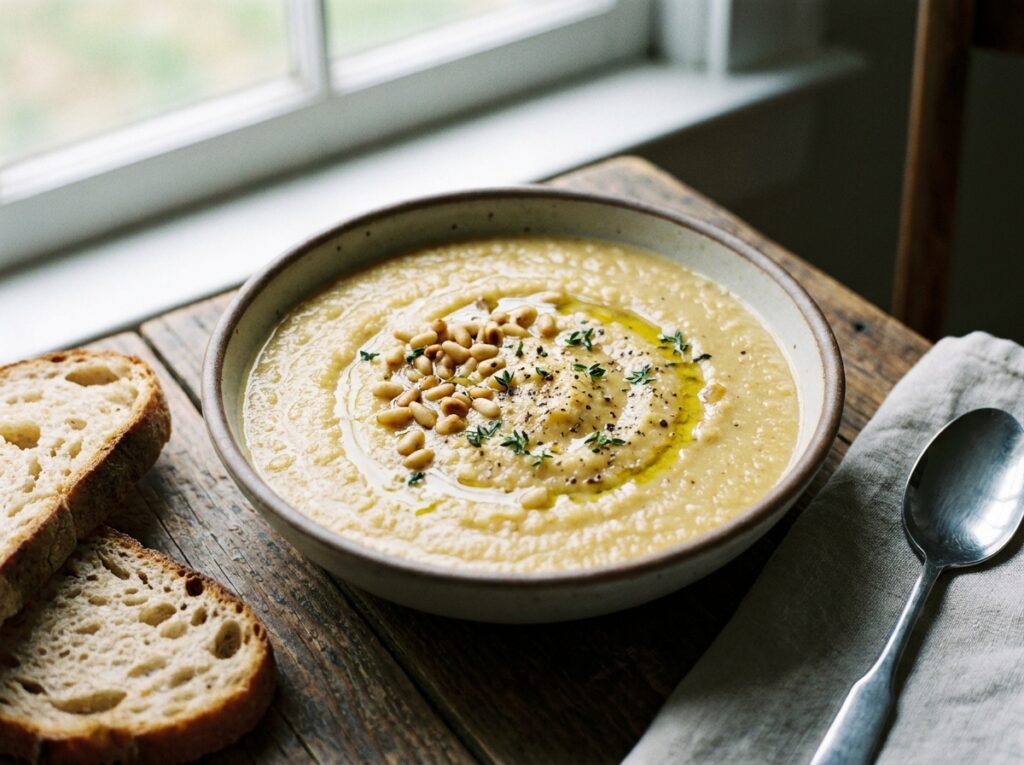
Cauliflower Soup
Without Cream
Silky, nourishing, and impossibly velvety — with not a drop of dairy in sight
I spent years believing that a truly silky, luxurious soup required cream — that richness was something you poured in from a carton, not something you coaxed from the vegetables themselves. This Cauliflower Soup Without Cream changed my thinking entirely. The secret lies not in dairy but in one deceptively simple technique: roasting the cauliflower before it goes anywhere near a pot. That single act transforms a mild, water-logged vegetable into something deep, nutty, and caramelised at the edges — a vegetable that has something to say when blended.
The result is a soup with a texture so smooth and creamy that every person I have ever served it to has assumed there must be double cream hiding somewhere in the bowl. There is not. There is cauliflower, good olive oil, onion, garlic, a little vegetable stock, and the knowledge that when you blend a starchy vegetable long enough and thoroughly enough, it gives you everything a cream would.
This is the kind of recipe I reach for when I want something deeply comforting but genuinely wholesome — a dairy-free soup that does not taste like a compromise. It is naturally vegan, naturally gluten-free, and naturally impressive. The total cost per bowl is remarkably low. The flavour payoff is anything but.
Every person I have ever served this soup to has asked where the cream is. I take quiet satisfaction in telling them there is none.
The roasting step is non-negotiable — it is what separates this from a pale, watery bowl of blended cauliflower, which is not what we’re after at all. Twenty-five minutes in a hot oven with olive oil and salt produces golden, caramelised florets that carry a complexity you simply cannot achieve by boiling. If you have another 10 minutes, roast a handful of florets separately and keep them whole for garnish — floated on the surface of the bowl with a thread of good olive oil and a pinch of smoked paprika, they turn a simple soup into something restaurant-worthy.
01 — What You’ll NeedIngredients
The ingredient list is deliberately spare. This recipe is an exercise in making a few humble things taste extraordinary rather than layering in complexity through volume. The one place I urge you not to economise is the olive oil — use something you actually enjoy the taste of, because it is a genuine flavour component here, not merely a cooking medium. A grassy, peppery extra-virgin olive oil makes the finished soup taste more alive.
- 1 large cauliflower (approx 900g)
- 1 large white onion, diced
- 5 garlic cloves, unpeeled
- 3 tbsp extra-virgin olive oil
- 900ml vegetable stock (good quality)
- 1 tsp ground cumin
- ½ tsp smoked paprika
- ½ tsp ground white pepper
- Salt, to taste
- Juice of ½ lemon
- Reserved roasted florets
- Drizzle of extra-virgin olive oil
- Pinch of smoked paprika
- Fresh chives or flat-leaf parsley
- Toasted pumpkin seeds (optional)
- Crusty bread, to serve
02 — How to Make ItStep-by-Step Method
The method divides cleanly into two acts: roasting and building. Do not rush the roasting — colour on the cauliflower is flavour in the bowl. Everything else follows naturally and takes very little active attention. This is a recipe that rewards patience in the oven and almost no effort at the stove, which is exactly the kind of weeknight soup recipe I return to again and again.
Preheat your oven to 210°C (410°F / Gas Mark 7). Cut the cauliflower into medium florets — not too small, or they’ll burn before they caramelise. Spread them in a single, uncrowded layer across a large baking tray. Overcrowding steams rather than roasts, producing limp florets instead of golden ones. Drizzle generously with 2 tablespoons of the olive oil, season well with salt, and tuck the unpeeled garlic cloves in among the florets. Roast for 22–28 minutes, turning once halfway, until deeply golden at the edges. Set aside about a handful of the best-looking florets for garnish. The garlic cloves will have softened to a sweet, mellow paste inside their papery skins — don’t discard them.
While the cauliflower roasts, heat the remaining tablespoon of olive oil in a large, heavy-bottomed saucepan over medium-low heat. Add the diced onion with a good pinch of salt and cook slowly for 12–14 minutes, stirring occasionally, until completely soft and just beginning to turn golden at the edges. Resist turning the heat up to hurry this along — a slowly cooked onion develops a natural sweetness that a quickly cooked one simply doesn’t have. Add the cumin, smoked paprika, and white pepper, stir for 60 seconds to toast the spices in the oil, then pour in the vegetable stock and bring to a gentle simmer.
Add all the roasted cauliflower (except the reserved garnish florets) to the stock and onion mixture. Squeeze the roasted garlic cloves from their skins directly into the pot — they will slide out as a soft, golden paste. Discard the empty skins. Stir to combine and simmer gently for 10 minutes so the cauliflower softens completely and the flavours meld together. The stock will take on a beautiful amber tinge from the roasted vegetables. This is the foundation of every great roasted vegetable soup — patience at every stage pays off in depth.
This step is where the magic happens. Remove the pot from the heat and blend the soup until completely smooth — a high-powered blender gives the most luxurious result; blend in two batches and be careful with the hot liquid. If using a stick blender, blend for at least 3 full minutes, moving the blade through the entire pot repeatedly. The longer and more thoroughly you blend, the creamier and more velvety the texture becomes. If the soup feels thicker than you’d like, thin it with a splash of hot stock or water. Taste and adjust the seasoning, then add the lemon juice — the acidity wakes up the entire bowl and is not optional.
Ladle the soup into warmed bowls. Place 2–3 of the reserved roasted florets in the centre of each bowl, slightly off to one side. Drizzle a small thread of your best olive oil over the surface, dust lightly with smoked paprika, and scatter a few fresh chives or parsley leaves. Toasted pumpkin seeds add a welcome crunch against the smooth soup. Serve immediately with crusty bread — a thick slice of sourdough or a warm flatbread is ideal for sweeping the bowl clean at the end, which is inevitable.
03 — Notes from the KitchenTips & Variations
After making this soup through many seasons and for many different tables, I have accumulated a set of insights that genuinely improve the outcome. These are the kinds of details that don’t make it into ingredient lists but live in the muscle memory of anyone who cooks a recipe repeatedly. I offer them here in the spirit of passing something useful on.
- For an even deeper flavour, add 2 tablespoons of white miso paste to the blender — it amplifies the savoury, umami quality of the soup without making it taste Japanese. One of the most useful tricks in dairy-free cooking.
- A tablespoon of tahini blended into the finished soup adds a subtle nuttiness and extra body — particularly good if you want something more substantial for a main course serving.
- Frozen cauliflower works, but roasts less successfully as it releases more water. Thaw and pat very dry, then roast at a slightly higher temperature (220°C) for best results.
- Add a peeled and diced potato to the pot with the onion for an even thicker, starchier texture — particularly good in colder months when you want something genuinely fortifying.
- For a Moroccan-spiced version, add ½ tsp each of ground coriander, turmeric, and a pinch of cayenne alongside the cumin. Garnish with a spoonful of harissa oil.
- This soup freezes beautifully for up to 3 months. Freeze before adding the lemon juice and garnishes — add those fresh when reheating.
- Reheat gently over low heat, stirring regularly, adding a splash of stock if the soup has thickened in the fridge. Never boil blended soups — it diminishes the texture.
- For a Stilton or blue cheese twist (for non-vegan servings), crumble a little cheese into the bowl before ladling the hot soup over it — the cheese melts into the soup as it lands, adding a rich, funky depth.
04 — The Science of ItWhy This Soup Doesn’t Need Cream
It is worth understanding why this soup achieves such a convincingly creamy texture without any dairy at all, because once you understand the mechanism, you can apply it to other blended vegetable soups across the board.
Cauliflower is unusually high in both starch and fibre relative to its water content. When cooked until tender and then blended under high speed, those starch granules rupture and release their content into the surrounding liquid, forming what is essentially a natural starch-thickened emulsion. The longer you blend, the more starch is released and the smoother the result. This is the same principle behind a potato-thickened leek soup or a blended bean soup — the ingredient is its own thickener.
Roasting adds a second layer of creaminess by reducing the water content of the cauliflower before it enters the blender. A raw cauliflower floret is mostly water; a roasted one is concentrated, drier, and richer. When it blends, it contributes a denser, more flavourful base to the soup rather than simply diluting the stock. The olive oil, meanwhile, emulsifies into the blend, contributing the kind of round, coating mouth-feel we associate with cream. It is one of the more quietly elegant things that happens in a blender.
05 — At a GlanceNutritional Information
Per serving (approximately 300ml, without bread), based on 6 servings. Cauliflower is an exceptional source of vitamin C, folate, and choline, and its high fibre content makes this soup genuinely filling despite its modest calorie count. It is a reliable option for anyone following a low-calorie, dairy-free, or plant-based diet.
06 — On the TableServing & Storage
This soup holds its own as a light lunch with bread or as an elegant first course at a dinner party — it is the kind of dish that looks far more considered than the effort it required. For a winter dinner party starter, serve in small cups or espresso bowls rather than full soup plates — it concentrates the experience and leaves guests wanting more before the main course arrives.
Leftovers keep in the refrigerator for up to 4 days in a sealed container. The soup will thicken significantly overnight as the starch continues to absorb liquid — this is normal and not a problem. Simply reheat with a splash of vegetable stock or water, stirring over low heat until it returns to its original pourable consistency. It also freezes excellently for up to 3 months; freeze in individual portions for effortless weekday lunches that feel anything but routine.
